

UT Acoustic MEMS Group · Hall Lab · The University of Texas at Austin
Sensors that hear,
feel and survive.
Microphones, accelerometers, ultrasonic transducers and hydrophones, built at the micro scale and taken from design and cleanroom fabrication all the way to system-level testing.
Current projects funded by NASA · NIH · DARPA
Pushing the limits.
Four results from 2026, each a question we set out to answer.
What we work on.
Six research directions, one approach: model it, make it in the cleanroom, package it, and measure it.
Sensors for extreme heat
Piezoelectric transducers and transistors that keep working at 800 to 1000 °C.
Learn more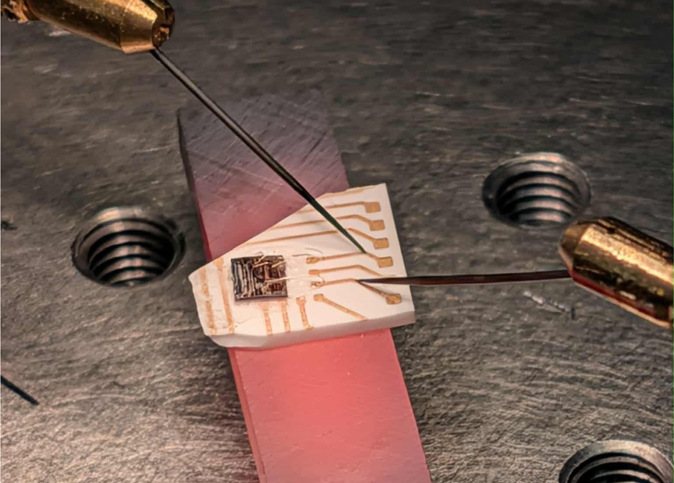
Piezoelectric MEMS transducers
Bimorph PMUTs and resonators pushed to large amplitude, measured with high-velocity LDV.
Learn more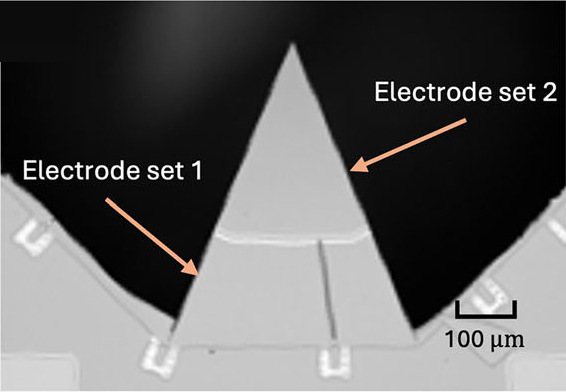
Photonic inertial sensors
Accelerometers read out by light on a chip, with on-chip fringe counting.
Learn more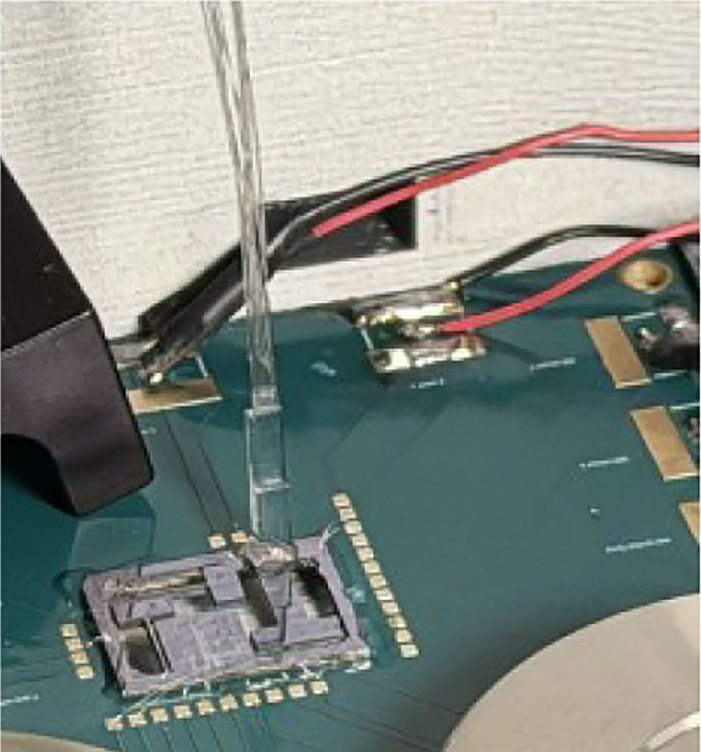
Mechanical frequency combs
Parametric three-wave mixing turns one resonator into a comb of sensing tones.
Learn more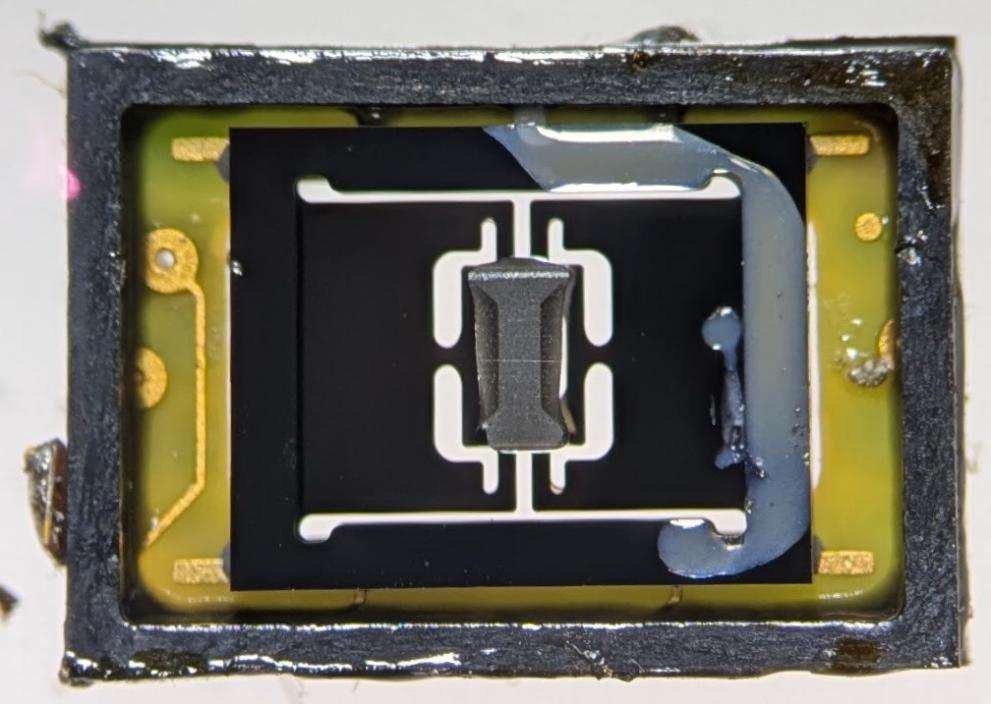
MEMS microphones
One diaphragm that rocks and bends like the coupled eardrums of a fly.
Learn more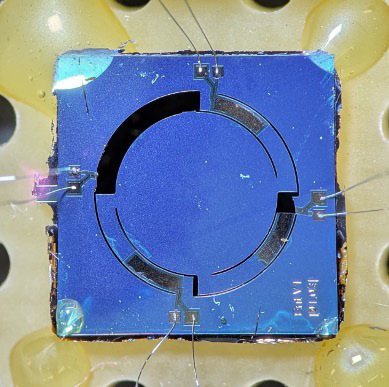
Underwater acoustics & ultrasound
Magnetostrictive hydrophones quieter than a calm sea, and immersion ultrasound transducers.
Learn more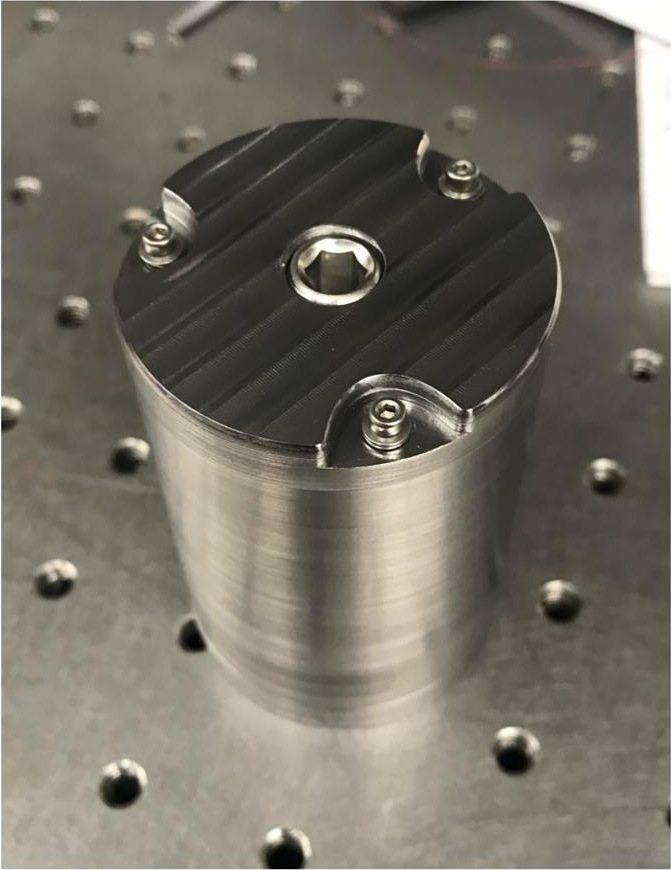
2026
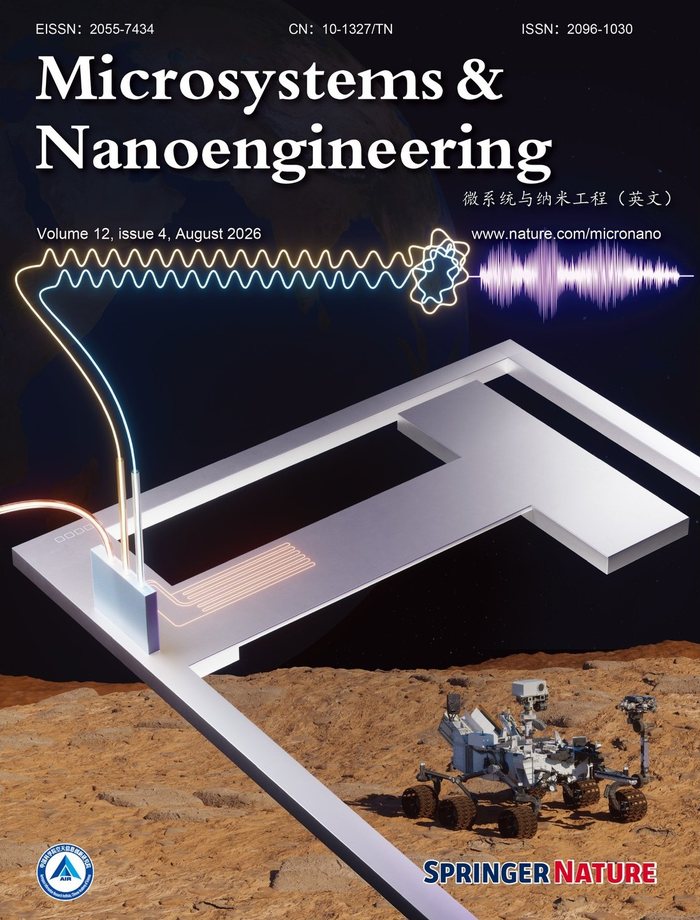
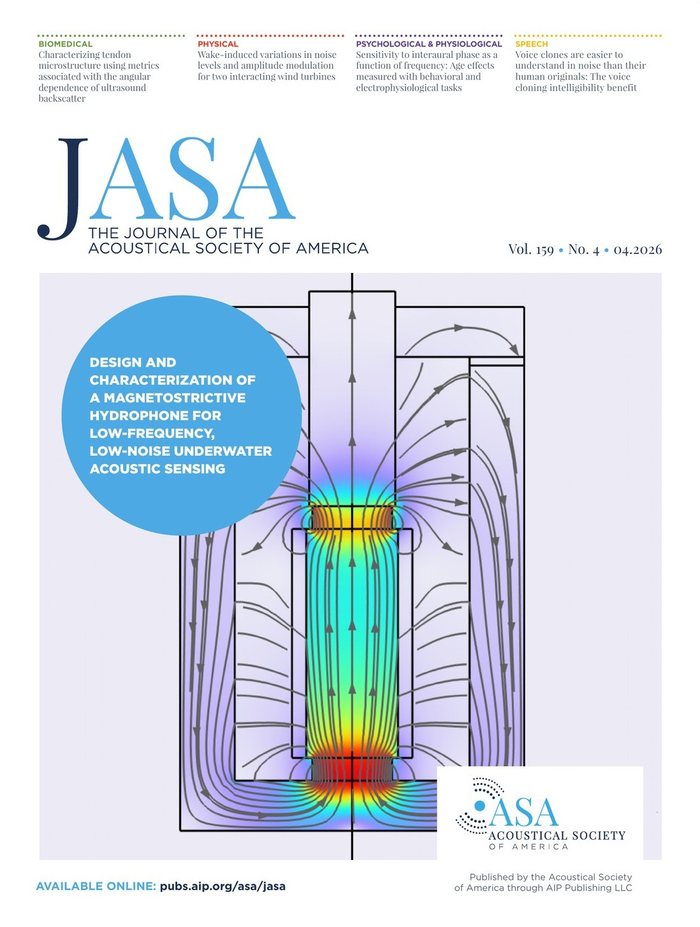
Two journal covers.
Microsystems & Nanoengineering (Nature Portfolio, August) and The Journal of the Acoustical Society of America (April).
Where our PhDs go.
We work more closely with industry than most academic labs. Prof. Hall founded Silicon Audio, an Austin company that builds precision seismic and acoustic sensors, so the path from a lab result to a product is short and visible.
Latest news.
All newsA lithium niobate ultrasonic transducer measured up to 1000 °C
Liu et al. characterize bimorph X-cut LiNbO₃ PMUTs from room temperature to 1000 °C in APL Electronic Devices.
800 °C open-air characterization of III-N HEMTs
Rapid dual-frequency extraction lets the team measure GaN transistors in open air at 800 °C (APL Electronic Devices).
Cover of Microsystems & Nanoengineering
Meng et al. report the first photonic-chip accelerometer with on-chip fringe counting, featured on the August 2026 cover.