

Research
We design, fabricate, package and test MEMS and photonic sensors. Most projects run the full cycle in-house, from a model on paper to a device in the cleanroom to a measurement on the bench.
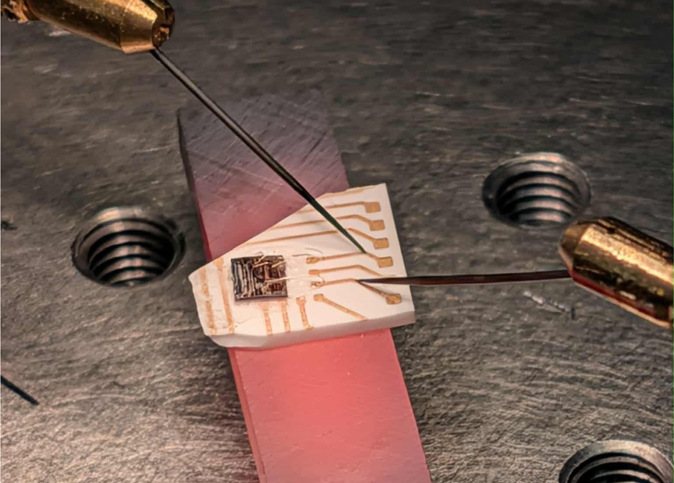
Sensors and electronics for extreme temperatures
Hypersonic flight, ground-test facilities, engines and deep wells all need sensors that keep working where silicon electronics fail. We build piezoelectric transducers from single-crystal lithium niobate and aluminum nitride, characterize them on hot stages up to 1000 °C, and develop fast measurement methods for the electronics that must sit next to them, including GaN high-electron-mobility transistors tested in open air at 800 °C. This continues the group's longer line of work on pressure and shear-stress sensors for Mach 6 hypersonic flows.
Key papers
- High-temperature characterization of bimorph X-cut lithium niobate piezoelectric micromachined ultrasonic transducers up to 1000 °C · APL Electronic Devices, 2026
- 800 °C open-air electrical characterization of III-N HEMTs using rapid dual-frequency extraction · APL Electronic Devices, 2026
- Piezoelectric pressure sensors for hypersonic flow measurements · Journal of Microelectromechanical Systems, 2019
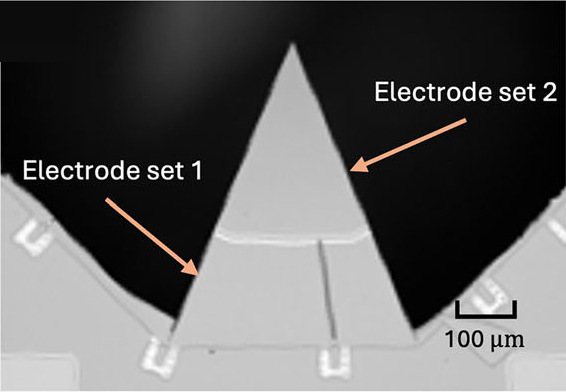
Lithium niobate and aluminum nitride piezoelectric transducers
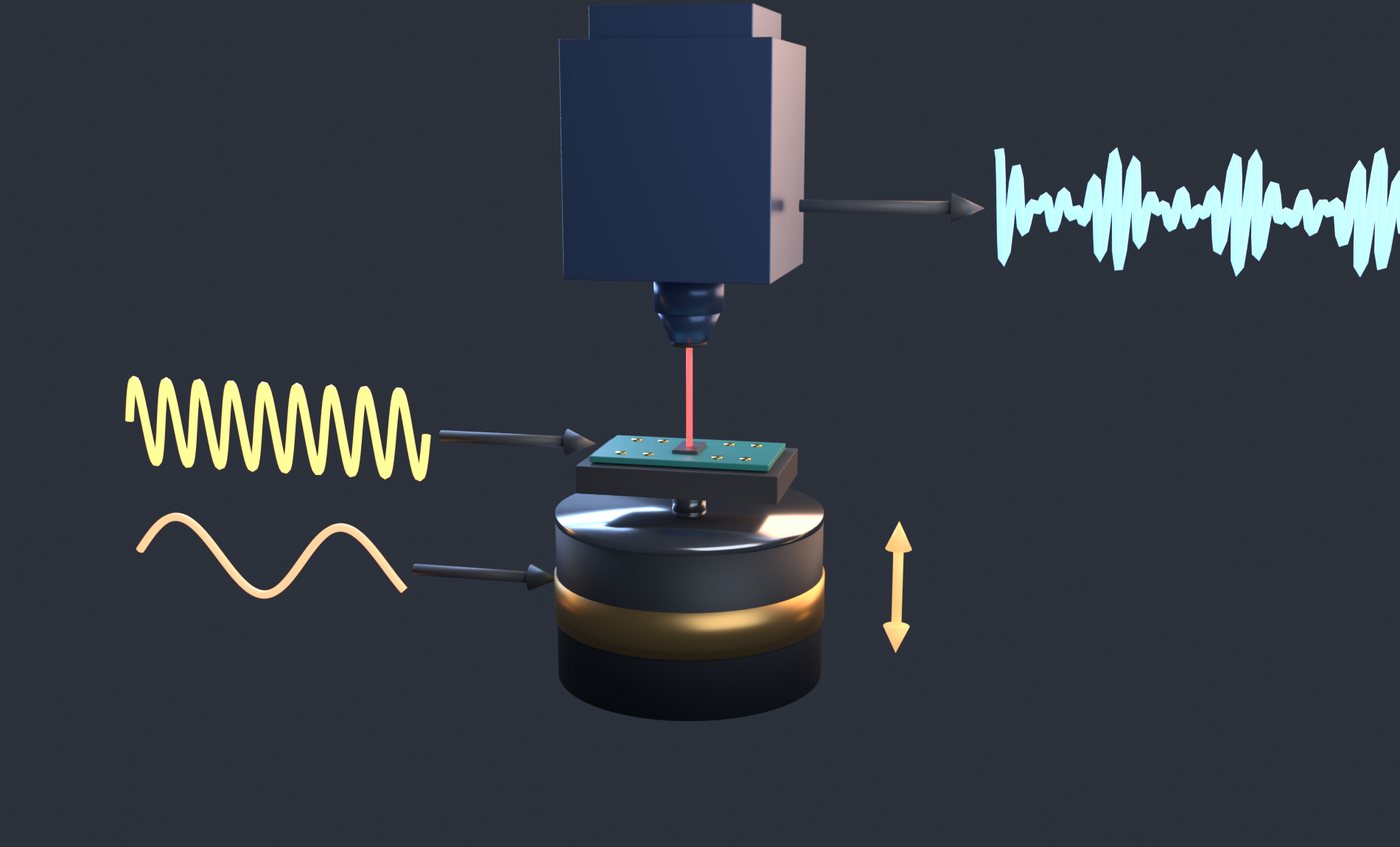
Piezoelectric micromachined ultrasonic transducers (PMUTs) and resonators are at the heart of ultrasound imaging, ranging and acoustic communication. With Prof. Ruochen Lu's group we design bimorph lithium niobate PMUTs on transferred periodically poled films. We also drive an AlN bimorph wedge resonator to about 50 m/s, ten times faster than conventional MEMS, and study large-signal whip-mode resonators in LTOI. Measuring motion that fast needed its own technique, so we developed high-velocity laser Doppler vibrometry methods to do it.
Key papers
- High-velocity laser Doppler vibrometry measurements on an aluminum nitride bimorph wedge resonator · Communications Engineering, 2026
- Bimorph lithium niobate piezoelectric micromachined ultrasonic transducers · IEEE Transactions on Ultrasonics, 2026
- Thickness-field excited bimorph lithium niobate piezoelectric transducer · Journal of Microelectromechanical Systems, 2026
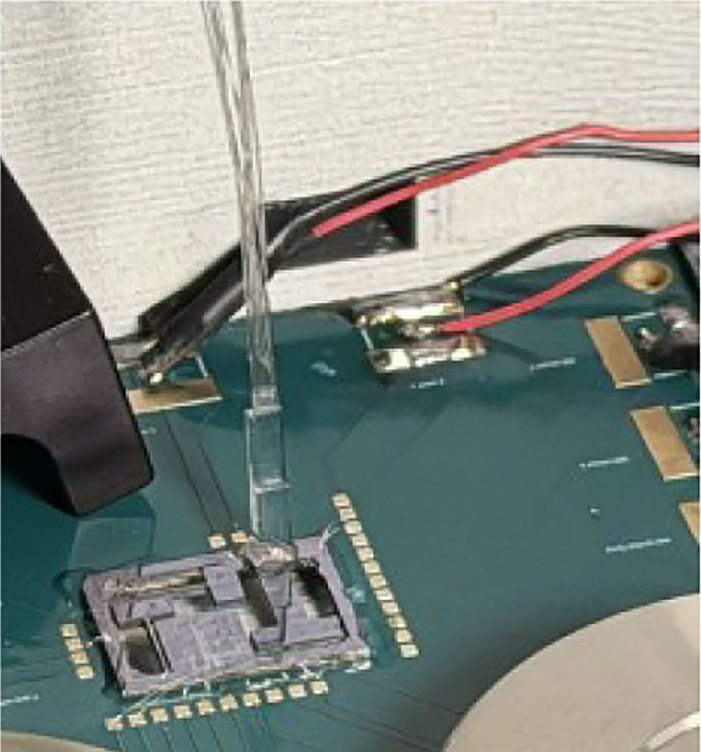
Photonic integrated circuit (PIC) accelerometers and inertial sensors
Optical readout gives inertial sensors low noise and immunity to electrical interference. We integrate mechanical proof masses directly with silicon nitride photonic waveguides, reading motion with on-chip Mach–Zehnder interferometers. Our monolithic photonic accelerometer with on-chip fringe counting reaches 2.0 µg/√Hz with 39 dB more dynamic range, and was featured on the August 2026 cover of Microsystems & Nanoengineering. The same platform is now being used for optomechanical microphones.
Key papers
- An integrated monolithic photonic accelerometer with on-chip fringe-counting · Microsystems & Nanoengineering, 2026 · Cover
- A novel cantilever-based silicon photonic accelerometer using Mach–Zehnder interferometer targeting 10-ng/√Hz noise floor · IEEE Sensors Journal, 2025
- A novel opto-mechanical accelerometer in low-loss silicon nitride photonics platform with high dynamic range achieved via heterodyne detection · IEEE Sensors Journal, 2025
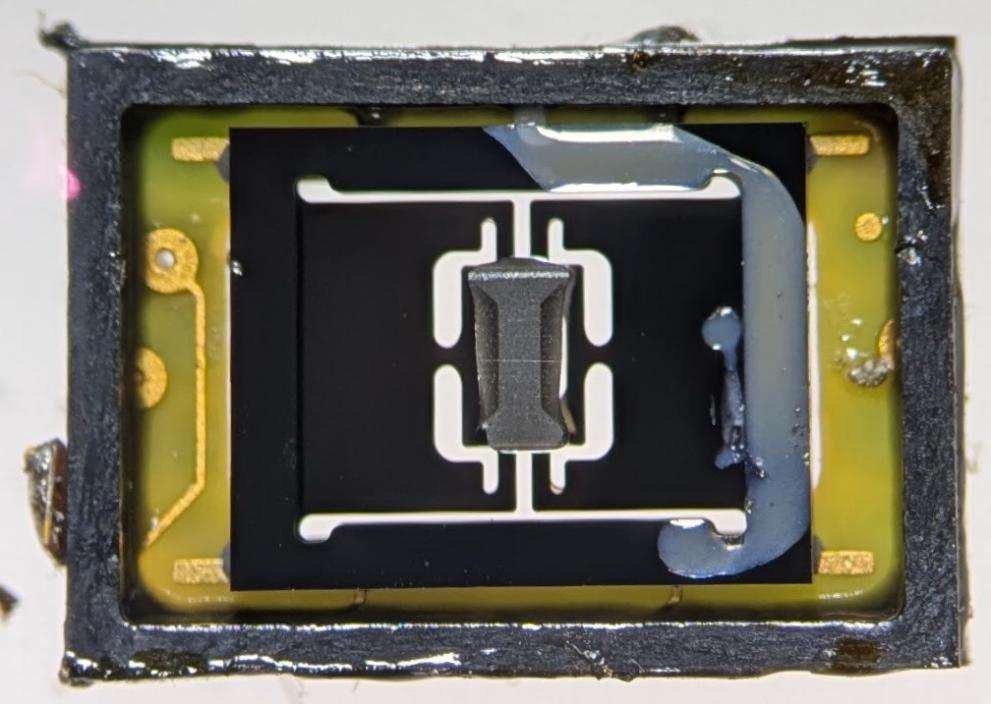
Mechanical frequency combs for inertial sensing
Optical frequency combs transformed precision timing and spectroscopy. We are building their mechanical counterpart: a MEMS resonator driven by three-wave-mixing parametric excitation produces a comb of evenly spaced tones that can be read out for inertial sensing. This work, with collaborators at UT Austin and the City University of New York, points to a scalable new sensing modality.
Key papers
- Mechanical frequency combs via three-wave-mixing parametric excitation: a scalable inertial-sensing modality · Research Square (preprint), 2026
MEMS microphones, including fly-inspired directional designs
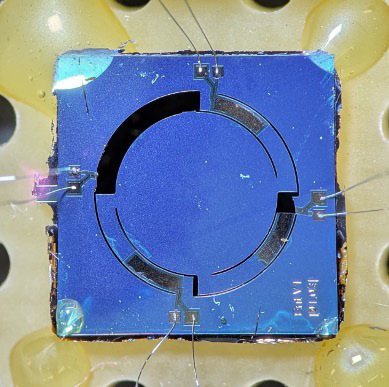
The parasitoid fly Ormia ochracea locates sound with eardrums only about half a millimeter apart, by coupling them mechanically. Our microphones borrow that trick: a single diaphragm whose rocking and bending modes act as three microphones, one omnidirectional and two with orthogonal in-plane directivity. We also study lithium niobate microphones with high SNR potential, optimize piezoelectric electrode layouts automatically, and use commercial-style MEMS microphone dies as ultrasonic transmitters. This line of work was featured on NPR in 2014.
Key papers
- Fly-inspired directional MEMS microphone with omnidirectionality and two in-plane orthogonal directivities · IEEE Sensors Journal, 2025
- Lithium niobate microphone with high SNR potential · IEEE Sensors Journal, 2025
- An air-coupled electrostatic ultrasound transducer using a MEMS microphone architecture · Journal of Microelectromechanical Systems, 2022
Underwater acoustic sensors and ultrasound
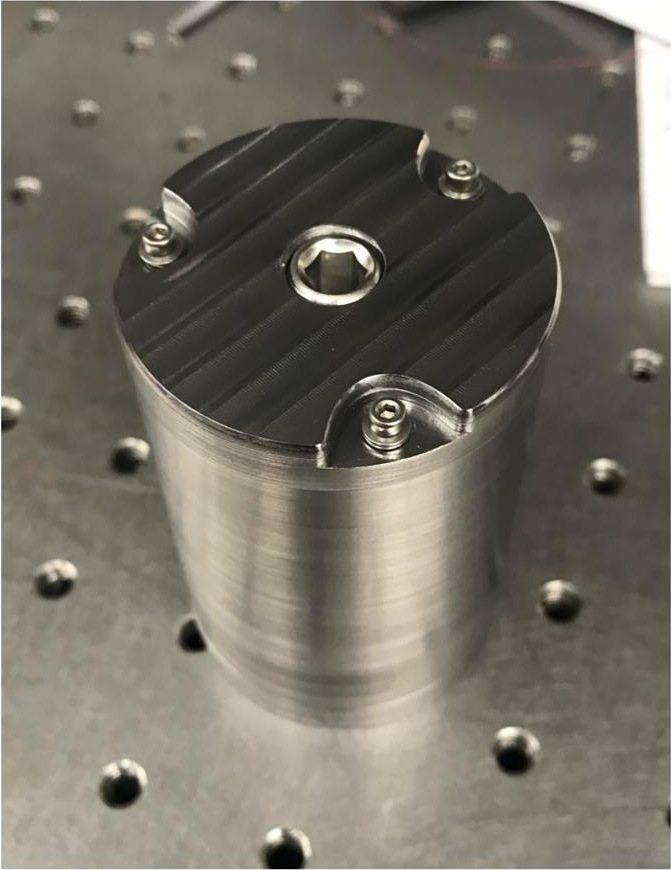
Listening to the ocean at low frequencies needs sensors with extremely low self-noise. We built the first hydrophone based on a giant magnetostrictive material, with an estimated noise floor below Sea State 0 (featured on the April 2026 JASA cover), along with magnetostrictive accelerometers and jerk sensors. In our scanning ultrasound tanks we characterize immersion PMUTs and develop ultrasound probes, including a transducer probe for direct ultrasonic neuromodulation.
Key papers
- Design and characterization of a magnetostrictive hydrophone for low-frequency, low-noise underwater acoustic sensing · The Journal of the Acoustical Society of America, 2026 · Cover
- Characterization of an immersion lithium niobate piezoelectric micromachined ultrasound transducer using laser Doppler vibrometry and hydrophone measurements · Proceedings of Meetings on Acoustics, 2025
- Transducer probe for direct ultrasonic neuromodulation and measurement · U.S. Patent Application Publication US 2026/0061226 A1, 2026
The lab you would work in
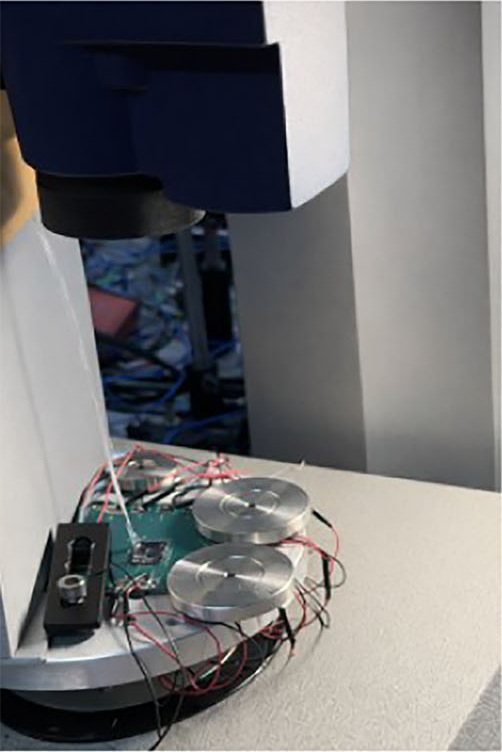
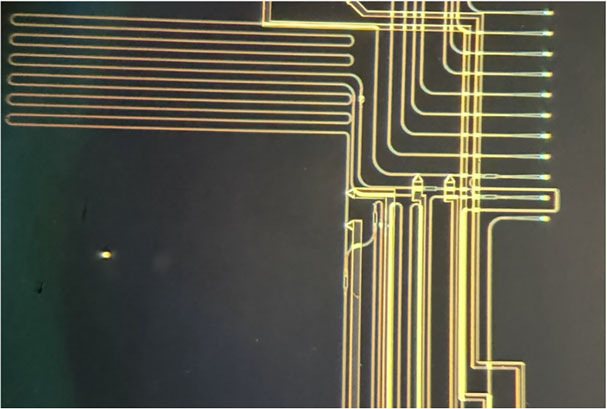
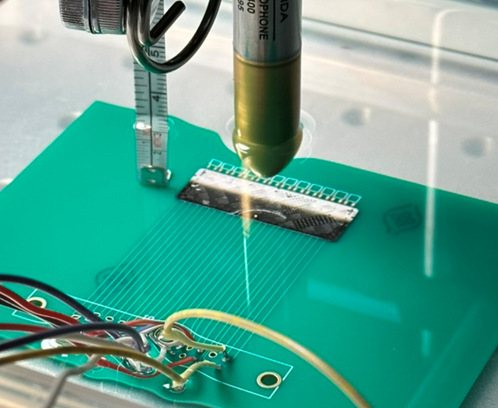
Devices are fabricated in the Microelectronics Research Center cleanroom (over 12,000 sq ft of Class 100 and 1000 space, part of the NSF NNCI) and tested in our Acoustical MEMS Test Laboratory in EER. More on facilities.
Earlier work
Projects that shaped the group and several of its alumni.
Fly-inspired hearing
Microphones modeled on the ears of Ormia ochracea. NPR, 2014
Optically read seismometers
Grating-based optical sensors commercialized by Silicon Audio, tested on glaciers in Alaska and Greenland and competing for a mission to Europa. Anchorage Daily News, 2017
Infrasound
Microphones for 0.01 to 20 Hz, the range of earthquakes, volcanoes and explosions, including nuclear test monitoring for treaty verification.
Hypersonic flow sensing
Piezoelectric pressure and shear-stress sensors tested in a Mach 6 facility.
Elastic-wave telemetry
Sending data through vibrations in steel well casing from deep underground storage sites, where radio does not reach.
Capacitive ultrasound
Rotational CMUTs and broadband capacitive microphones with more than 200 kHz bandwidth.